Are Open Containers Legal on Gameday in Knoxville?
True or False: Open containers are legal on gameday in Knoxville.
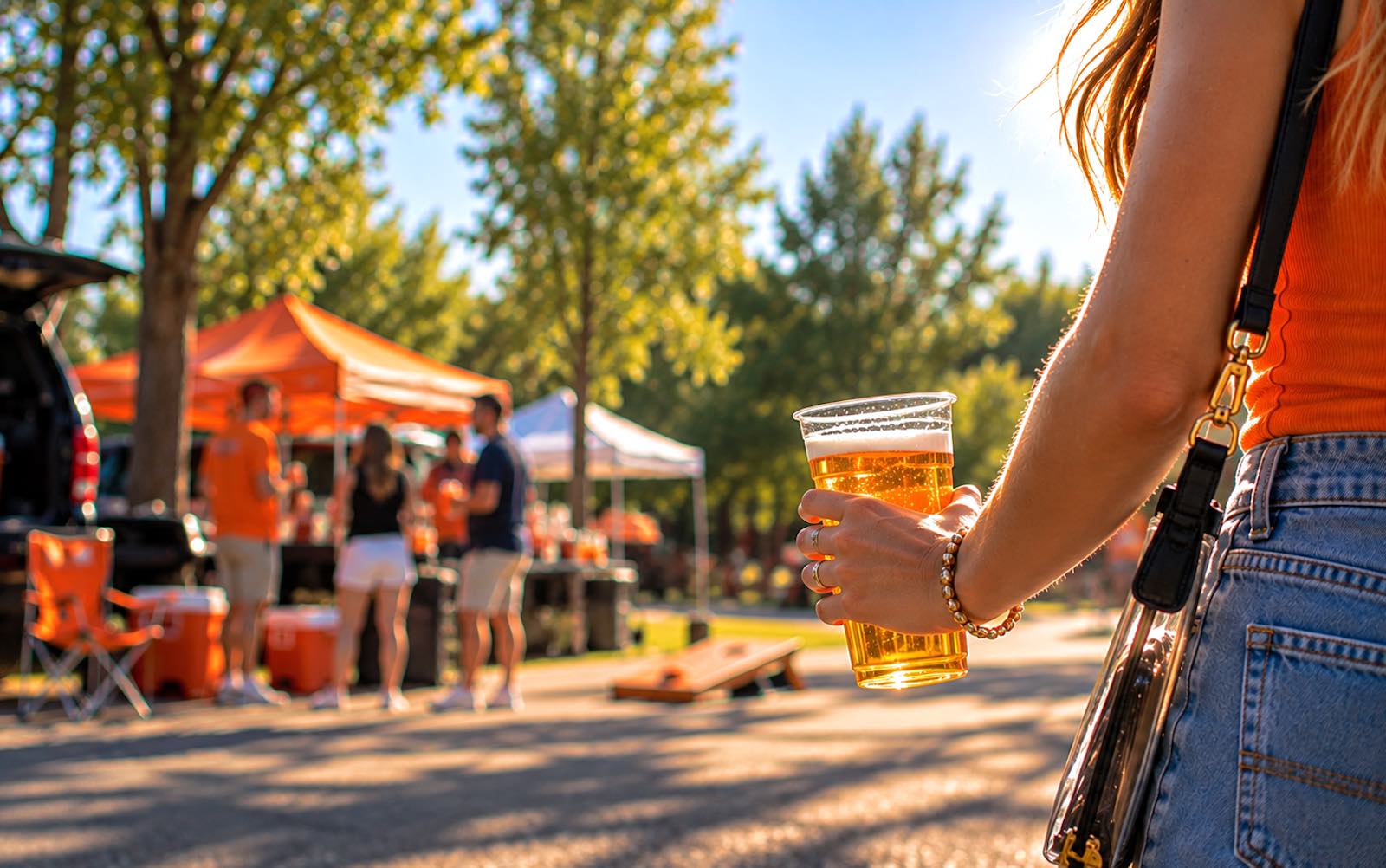
False, with a few exceptions. Knoxville generally prohibits open containers of alcohol on public streets, sidewalks, parks, and parking lots. However, certain designated areas and permitted events have different rules.
Whether you’re tailgating near Neyland Stadium or celebrating downtown after a Tennessee football game, here’s what you should know about Knoxville’s open container laws.
What Does Knoxville’s Open Container Law Say?
Under Section 4-1 of the Knoxville Code of Ordinances, possessing or consuming an open alcoholic beverage is generally prohibited in public areas, including:
- Streets and sidewalks
- Public parks and playgrounds
- Public parking lots
- School property and recreational facilities
An open container can include an opened beer can, bottle, or cup containing alcohol. You do not have to be intoxicated to violate the ordinance.
Exceptions may apply to certain permitted events and designated areas.
Where Are Open Containers Allowed in Knoxville?
Market Square’s Designated Outdoor Refreshment Area
In July 2026, Knoxville introduced a Designated Outdoor Refreshment Area (DORA) in Market Square, allowing adults 21 and older to carry alcoholic beverages purchased from participating businesses within specific boundaries.
The program has several requirements:
- Drinks must come from participating businesses and be served in approved containers with DORA identification.
- The designated hours are 10 a.m. to 10 p.m., seven days a week.
- Outside alcohol cannot be brought into the area for public consumption.
- Beverages must be finished or emptied before leaving the designated boundaries.
Knoxville has also approved plans for a DORA around Covenant Health Park. Visitors should check the City’s current information to confirm which areas are operating and where their boundaries are located.
For a closer look at the downtown rules, read our article: Downtown Knoxville Open Container Zone Laws.
Tailgating Near Neyland Stadium
The University of Tennessee permits tailgating in designated campus locations, subject to university policies and applicable alcohol laws.
Fans should confirm the rules for their specific tailgating area rather than assuming that surrounding streets, sidewalks, or parking lots are covered by the same permissions.
Outside alcoholic beverages are also prohibited inside Neyland Stadium.
For official tailgating guidelines, consult UT Athletics’ football gameday guide before attending.
Can You Have an Open Container in Your Car?
Tennessee has a separate law addressing alcohol in motor vehicles.
Under Tennessee Code Annotated § 55-10-416, drivers cannot possess or consume open alcoholic beverages while operating a vehicle. A vehicle is considered in operation when its engine is running, even if it is stationary.
The state statute specifically applies to drivers, although additional local restrictions may apply to passengers.
An open container violation is also different from a DUI charge. However, alcohol found in a vehicle may become relevant during an impaired-driving investigation.
What Happens If You Violate an Open Container Law?
An open container violation can result in a citation or other legal consequences, depending on the applicable law and circumstances.
Potential consequences may include fines, court costs, and court appearances.
In some situations, additional charges may arise. For example, Tennessee’s public intoxication law, Tenn. Code Ann. § 39-17-310, addresses intoxication in public when a person endangers themselves, others, or property, or unreasonably annoys people nearby.
Open container violations and public intoxication are separate offenses. Possessing an alcoholic beverage in a prohibited area does not automatically mean someone is intoxicated.
Tips for a Safe Knoxville Gameday
A few simple precautions can help you avoid unnecessary legal trouble:
- Check the rules before you go. Know whether your tailgating location or downtown destination permits alcohol.
- Pay attention to posted boundaries. Finish or dispose of alcoholic beverages before leaving designated areas.
- Follow stadium policies. Review Neyland Stadium’s prohibited items before heading to the gates.
- Arrange transportation. If you plan to drink, choose a designated driver or another safe way home.
Planning ahead lets you focus on enjoying the game rather than worrying about an unexpected citation.
Frequently Asked Questions
Can you walk around downtown Knoxville with an open beer?
Generally, no. Knoxville restricts open containers on public streets and sidewalks, with exceptions for designated areas and permitted events.Can you take a drink from Market Square to Gay Street?
Not under the Market Square DORA rules. Alcoholic beverages must remain within the designated boundaries.Is alcohol allowed at UT football tailgates?
Alcohol may be permitted in university-approved tailgating areas, subject to applicable laws and university policies. Rules depend on the location.Can you get an open container citation if you’re not drunk?
Yes. An open container violation does not necessarily require proof of intoxication.
Have Questions About an Open Container Charge?
Even a seemingly minor alcohol-related violation can create legal concerns. The circumstances of an incident, including where it occurred and which laws apply, can affect how a case is handled.
At Garza Law Firm, our criminal defense attorneys help individuals understand their rights and legal options.
If you or someone you know has been cited or charged with an open container violation, public intoxication, or a related offense in East Tennessee, contact Garza Law Firm to discuss your situation.
This article is for general informational purposes only and does not constitute legal advice. Laws, local ordinances, and university policies may change. Every case depends on its individual circumstances. Reading this article does not create an attorney-client relationship.